Navigating Driveway Disputes and Neighborhood Conflict
I. Introduction
Neighborhoods are shared spaces where the lines between public and private can blur, especially near schools. A seemingly simple act—a parent parking in a resident's driveway to wait for a child—can escalate into a full-blown confrontation that leaves both parties feeling wronged. This article examines a real incident where a homeowner, after repeatedly tolerating such parking, finally took a stand in a way that generated honking, doorbell ringing, and a tense standoff. We'll explore the deeper dynamics at play: the erosion of patience, the failure of direct communication, and the escalation of a minor inconvenience into a power struggle. By dissecting this case, we aim to provide readers with insights into community conflict resolution, the importance of setting clear boundaries early, and strategies for maintaining composure when faced with entitlement on one's property. Whether you've dealt with similar issues or simply want to understand how small disagreements can spiral, this analysis offers valuable lessons for fostering respectful coexistence.
II. The Situation (Story Summary)
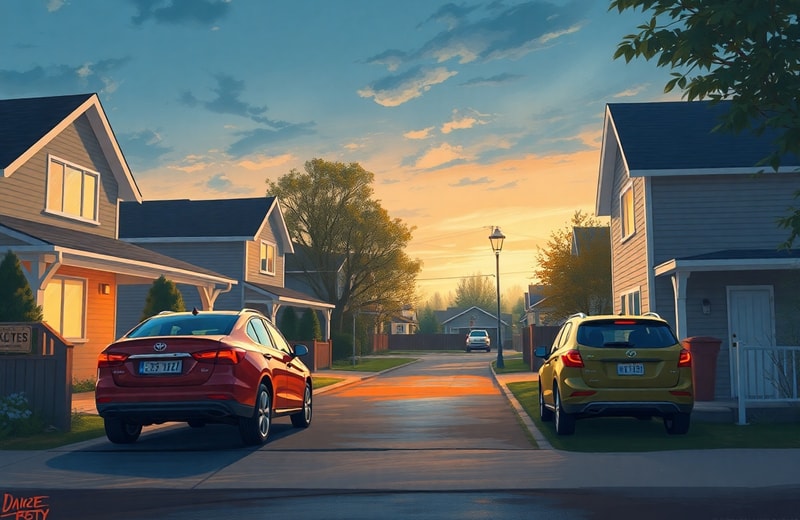
A homeowner living next to a school regularly tolerated parents backing into his driveway to wait for their children, as long as he didn't need to go anywhere. One day, he arrived home to find a woman parked in his driveway. He asked her to pull out so he could enter his garage, but she refused, saying she would only be a few minutes. The homeowner explained that he was blocking traffic due to the narrow street, but she insisted she'd move soon. Frustrated, he parked perpendicular to her vehicle, blocking both her car and his own driveway, and told her he needed to use the bathroom. He went inside, ignoring honking and doorbell ringing, until a child rang the bell. He said he was washing his hands. Eventually, he came out, slowly got into his car, and left. The woman sped away, honking. Neighbors later confirmed they had suspected similar issues.
III. Why This Conflict Happened
This conflict arose from a classic clash of assumptions and unmet expectations. The homeowner had silently tolerated similar parking for some time, creating an unspoken norm that parents could use his driveway when he wasn't home. However, this norm was contingent on his absence or convenience. The moment he needed access, the arrangement broke down because it was never explicitly communicated or agreed upon. The parent, on the other hand, likely saw the driveway as a temporary, harmless spot—a convenience that many parents might assume is acceptable near a school, especially if they see others doing it. Her refusal to move stemmed from a belief that her need (waiting a few minutes) trumped his need (immediate access). This is a common cognitive bias: we prioritize our own time pressures over others' without considering the full context. The homeowner's escalation—blocking her in—was a deliberate act of reciprocal inconvenience. He mirrored her disregard for his needs, using the same logic she applied: 'I'll only be a few minutes.' This tit-for-tat response transformed a minor inconvenience into a power struggle. Both parties were locked in a battle over who had the right to control the space. The narrow street and traffic blockage added external pressure, but the core issue was a failure to negotiate a solution that respected both parties' needs. The homeowner's physical discomfort (stomach cramps) added urgency, but his chosen response—escalation rather than clear, firm communication—ensured the conflict intensified.
IV. The Psychology Behind
Several psychological concepts illuminate this interaction. First, there's the 'bystander effect' or 'diffusion of responsibility'—the homeowner's initial tolerance of the parking may have been influenced by a desire to avoid conflict, assuming others would handle it. This built resentment over time, making his eventual response disproportionately harsh. Second, the parent displayed 'optimism bias'—believing her brief stay would cause no harm, underestimating the disruption. Her refusal to move when asked may also reflect 'reactance', a psychological response to perceived threats to one's freedom. The homeowner's request felt like an imposition, triggering a defensive reaction. The homeowner's escalation can be explained by 'emotional flooding'—the buildup of frustration and physical urgency overwhelmed his capacity for measured response. He shifted from a problem-solving mindset to a punitive one, seeking to teach a lesson rather than resolve the issue. This is common when people feel repeatedly disrespected; they may resort to 'counter-control' to reassert dominance. The child's involvement adds another layer: the parent's angry driving away and likely harsh words to the child afterward suggest 'displaced aggression'—venting frustration on a safer target. For the child, witnessing this conflict may create anxiety about authority and fairness. The neighbors' comment—'we kinda figured'—indicates a community pattern of passive avoidance, where residents tolerated the behavior without addressing it collectively, allowing resentment to fester.
V. Editorial Conflict Perspectives
Subject A Evaluation
What they did right: The homeowner initially did well by directly asking the parent to move, clearly stating his need (to enter his garage) and the external constraint (blocking traffic). He also provided a reasonable alternative—'pull out and then back in'—which showed an attempt at compromise. His decision to go inside to use the bathroom was a legitimate need, not a tactic, though he used it to delay.
What they did wrong: The homeowner's major misstep was escalating from a request to a punitive blockade. By parking perpendicular and then deliberately delaying, he transformed a minor conflict into a power struggle. This response was disproportionate and likely intended to humiliate the parent. He also failed to communicate his frustration earlier—silently tolerating the behavior built resentment. He could have set a clear boundary after the first few incidents: 'Please do not park in my driveway; I need access at all times.'
Subject B Evaluation
What they did right: The parent did very little right in this interaction. She could have apologized and moved immediately when asked, recognizing that the driveway is private property. She might have also acknowledged the traffic issue and offered to move quickly. However, she did eventually leave, albeit angrily, which avoided a prolonged standoff.
What they did wrong: The parent's primary error was assuming she had a right to use the driveway because it was momentarily convenient. Her refusal to move when asked showed disregard for the homeowner's needs and the traffic situation. She escalated the conflict by dismissing his request, forcing him to take drastic action. Her angry departure and likely harsh words to her child were also inappropriate responses to her own mistake.
Editorial Synthesis & Resolution Pathway
This conflict is a textbook example of how small courtesies, when taken for granted, can sour into major disputes. Neither party communicated effectively or empathetically. The homeowner's initial tolerance was a kindness, but without a clear boundary, it became an expectation. The parent's entitlement blinded her to the impact of her actions. The ideal resolution would have involved the parent apologizing and moving immediately upon request, and the homeowner stating his boundary calmly but firmly earlier. Both parties exhibited a lack of perspective-taking: the parent didn't consider the homeowner's need for access or traffic flow; the homeowner didn't consider that the parent might have been stressed or unaware of the pattern. In community living, small acts of consideration—saying 'I'm sorry, I'll move right away' or 'I appreciate you letting me park here before, but today I need you to move'—can prevent escalation. The lesson is not about who was 'right' legally (the homeowner was), but about how to handle everyday conflicts with grace. Maturity means addressing issues before they fester, communicating needs clearly, and choosing responses that de-escalate rather than punish.
VI. Relationship Behavior Analysis: Red Flags vs. Normal Errors
| Identified Behavior | Editorial Classification | Analytical Assessment & Impact |
|---|---|---|
| The homeowner deliberately blocked the parent's car and then delayed leaving the house, prolonging the standoff. | Red Flag | This behavior goes beyond a simple mistake; it's a punitive, retaliatory action intended to teach a lesson. It escalates a minor conflict into a power struggle and shows a willingness to cause inconvenience to enforce a point, which can damage community relationships. |
| The parent refused to move when asked and dismissed the homeowner's need, saying 'I'll only be a few minutes.' | Normal Relationship Mistake | While inconsiderate, this is a common error in judgment. The parent likely underestimated the inconvenience and assumed her short wait was harmless. Many people make this mistake when they are focused on their own schedule and fail to see the full context. |
| The homeowner silently tolerated the parking for some time without setting a clear boundary. | Normal Relationship Mistake | It's understandable to avoid confrontation, especially with neighbors. However, this passive acceptance created an unspoken expectation. It's a common mistake that many people make when they want to be agreeable but later regret it. |
| The parent drove away angrily, honking and likely yelling at her child. | Red Flag | This reaction indicates an inability to handle frustration constructively. Displacing anger onto a child is a concerning behavior that can affect the child's emotional well-being. It also shows a lack of accountability for her own role in the conflict. |
VII. Financial, Familial & Social Factors
This conflict highlights how social norms around school zones create implicit expectations. Parents often feel entitled to park anywhere convenient because of time pressure and the belief that 'everyone does it.' The homeowner, by living next to a school, faces a recurring social pressure to be accommodating, which can feel like a loss of control over his own property. Financially, the homeowner's property value could be affected by persistent parking issues, though this is minor. There is also a social cost: the homeowner may feel isolated if he confronts parents, while the parent may feel judged by other parents. The neighbors' comment—'we kinda figured'—suggests a community norm of silent tolerance, which can perpetuate the problem. Addressing such issues often requires collective action, such as a neighborhood watch or communication with the school, but individuals may fear being labeled as difficult. The power dynamic also favors the parent in terms of numbers (many parents may park), but the homeowner has legal property rights. However, enforcing those rights can be socially awkward. This case underscores the need for clear community guidelines and respectful communication to balance individual rights with communal harmony.
VIII. What Healthy Individuals Do Instead
A healthier approach would have involved both parties communicating with respect and clarity. When the homeowner arrived, he could have said, 'I'm sorry to interrupt, but I need to get into my garage right now. Could you please pull out? I have a medical urgency.' This frames the request around his need rather than the parent's fault. The parent, upon hearing this, should have apologized and moved immediately. If she felt put out, she could have said, 'I'm sorry, I didn't realize you needed in. I'll move right away.' This simple exchange would have taken seconds. If the homeowner had noticed the parking pattern earlier, he could have put a polite note on his driveway or spoken to the school office. Alternatively, he could have approached a parent parking there and said, 'Hi, I live here and sometimes need access. Could you please avoid parking in my driveway? I'd appreciate it.' This preemptive boundary-setting would have prevented the buildup. For the parent, if she was unaware of the private property issue, a sign or verbal notice would have been helpful. In the moment of conflict, the homeowner could have avoided the blockade by parking on the street temporarily, using the bathroom, then addressing the issue later with a calm conversation. The parent could have offered to move immediately and then chosen a different spot. The goal is to solve the problem without creating a scene, especially near a school where children are watching.
IX. Essential Relationship Lessons
- Lesson 1: Set boundaries early and clearly. If neighbors or parents repeatedly use your property, kindly but firmly state your limits before resentment builds. A simple sign or verbal request can prevent misunderstandings.
- Lesson 2: Use direct, non-escalatory language. When asking someone to move, frame it as a need rather than a demand: 'I need to get into my garage now; could you please pull out?' Avoid ultimatums or punitive actions.
- Lesson 3: Practice empathy and perspective-taking. Consider why the other person might be acting as they are—perhaps they are stressed, running late, or unaware of the impact. This doesn't excuse rudeness, but it can guide your response.
- Lesson 4: Avoid tit-for-tat escalation. Responding to inconsideration with deliberate inconvenience only fuels conflict. Instead, focus on your goal (e.g., getting into your driveway) without making the other person's experience worse.
- Lesson 5: Involve community resources if needed. If parking issues persist, consider talking to the school administration, posting a polite notice, or contacting local authorities for guidance—not as a first resort, but as a structured solution.
- Lesson 6: Manage your own emotional state. If you feel overwhelmed, take a moment to breathe before responding. The homeowner's stomach cramps added urgency, but he could have said, 'I really need to get inside; please move now. I'll explain after.'
- Lesson 7: Apologize when you've made a mistake. If you accidentally block someone's driveway, a sincere apology and immediate action to correct it can defuse tension. Owning up to errors builds goodwill and prevents escalation.
X. Frequently Asked Questions
Q: What should I do if someone parks in my driveway without permission?
A: First, stay calm. If you need access immediately, politely ask the person to move, explaining your need. If they refuse, you can call non-emergency police to report a trespasser or illegally parked vehicle. To prevent recurrence, consider posting a 'Private Driveway – No Parking' sign or speaking with the school administration if it's school-related.
Q: Is it ever okay to block someone in as retaliation?
A: Generally, no. Blocking someone in can escalate the situation and may be considered illegal detention or harassment. It's better to use de-escalation techniques or seek official help. If you feel unsafe, stay inside and call authorities.
Q: How can I address parking issues near schools without creating conflict?
A: Approach the school administration to suggest designated parent parking areas or drop-off zones. You can also talk to your neighbors to collectively address the issue. If you see a parent parking in your driveway, a friendly note on your car or a brief conversation can set boundaries without hostility.
Q: What are the legal rights regarding driveway parking?
A: In most jurisdictions, a driveway is private property. Unauthorized parking can be considered trespassing. You have the right to ask the person to leave, and if they refuse, you can involve law enforcement. However, local laws vary, so check your municipal codes.
XI. Final Editorial Verdict & Path Forward
This incident is a cautionary tale about the dangers of passive tolerance and reactive escalation. While the homeowner was legally in the right, his chosen method of asserting that right—blocking the parent in and delaying—was counterproductive and needlessly confrontational. The parent was clearly in the wrong for refusing to move and for her angry departure, but the homeowner's response did not foster resolution; it created a hostile environment that could have led to further conflict. The most accountable party is the parent, who initiated the incivility by parking on private property and then dismissing the owner's request. However, the homeowner bears responsibility for how he handled the situation. A more mature approach would have been to insist firmly but politely, and if refused, to take a photo and report the incident later, or to call for assistance. Both parties failed to communicate with empathy and respect. The true lesson is that in community living, we must balance our rights with our relationships. Winning a battle of wills often comes at the cost of long-term harmony. The healthiest outcome would have been an apology from the parent and a clear boundary from the homeowner, without the theater of retaliation. Moving forward, both individuals could benefit from reflecting on their communication styles and considering how to address future conflicts constructively.
XII. Editorial Responsibility Distribution
| Assessment Group | Weight |
|---|---|
| Homeowner Overreacted | 45% |
| Parent Was Unreasonable | 40% |
| Both Share Blame | 15% |
XIII. About the Author
This article was prepared by the Interpersonal Dynamics & Editorial Team, a group of writers specializing in community relations, conflict resolution, and social psychology. We analyze real-life situations to provide practical guidance for navigating everyday disputes with empathy and effectiveness. Our work is grounded in research on communication and human behavior, not clinical practice.
XIV. Sources & Further Reading
Disclaimer: The reference literature cited below comprises general authoritative studies on interpersonal dynamics and healthy relationship habits strictly for educational background.
- American Psychological Association – Tips on managing conflict and improving communication in everyday relationships.
- National Association of Realtors – Guidelines on property rights and neighborly etiquette regarding driveways and parking.
- Harvard Law School Program on Negotiation – Resources on de-escalation techniques and interest-based bargaining for community disputes.
Commentaires
Enregistrer un commentaire