Navigating Seat Swaps on Flights: Boundaries and Etiquette
I. Introduction
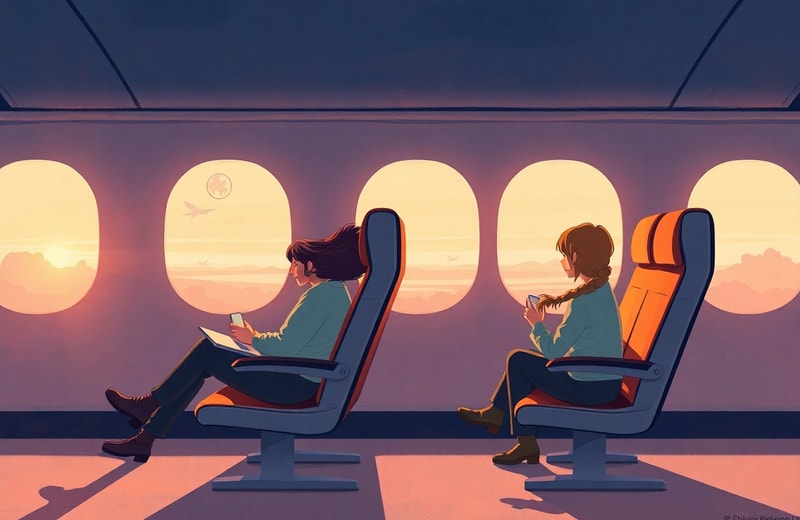
Air travel, even on short flights, often brings strangers into close quarters and occasionally tests social norms. A seemingly simple request to swap seats can quickly escalate into a tense standoff, revealing deeper questions about personal boundaries, entitlement, and communication. This article examines a real-life incident where a passenger refused to give up his pre-booked window seat to a father who wanted to sit with his young son. The exchange, which involved sarcasm, public shaming attempts, and eventual resolution by a third party, offers rich material for understanding how to navigate such situations gracefully. We'll analyze the motivations and missteps of both parties, explore the psychological undercurrents, and provide actionable lessons for maintaining civility while honoring personal preferences. Whether you're a frequent traveler or someone who values clear boundaries, this case study illuminates the delicate balance between accommodation and self-advocacy in public spaces.
II. The Situation (Story Summary)
A 29-year-old man boarded a 70-minute flight with a 2-2 seating arrangement, having booked a window seat. Upon arrival, he found a 7-year-old boy in his seat, next to his father in the aisle. The father asked if the passenger would swap with the son, offering an aisle seat in the row behind. The passenger declined, stating he only wanted a window seat. The father then made a sarcastic remark about the passenger not being a nice person, which the passenger challenged. The father admitted he was not being polite. Eventually, a passenger in the row behind offered to swap, allowing the family to sit together. The original passenger felt no obligation to accommodate the request, as he had booked his preferred seat in advance and valued his comfort.
III. Why This Conflict Happened
The conflict arose from a clash of expectations and communication styles. The father likely assumed that most passengers would prioritize a child's comfort over a personal preference, especially on a short flight. He may have felt entitled to a swap because he was traveling with a young child, a common but not universally accepted social norm. The passenger, on the other hand, valued his pre-booked window seat and saw no reason to sacrifice his comfort for strangers. His refusal was clear and firm, which the father interpreted as selfishness. The father's attempt to shame the passenger with a sarcastic comment escalated the situation, turning a simple request into a public confrontation. The passenger's defensive response further entrenched both parties. The presence of the family, including the mother and sister watching, added social pressure and a potential audience effect, making the father more determined to save face. The conflict highlights how unspoken assumptions about 'reasonable accommodation' can lead to friction when not aligned. The father's fait accompli—placing his son in the seat before asking—also set a tone of entitlement, putting the passenger in the position of having to displace a child, which felt manipulative.
IV. The Psychology Behind
Several psychological dynamics are at play. The father's request likely stemmed from a desire to manage his family's comfort and reduce his own stress, but his approach triggered reactance in the passenger, who felt his autonomy was being challenged. Reactance theory suggests that when people perceive a threat to their freedom, they become motivated to restore it, which may explain the passenger's firm refusal. The father's sarcastic comment ('you are a very nice person. I mean not a very nice person') is a classic shaming tactic, intended to induce guilt and compliance. However, it backfired, eliciting a defensive response and further entrenching the passenger's position. The passenger's insistence on the window seat, even without a strong reason, reflects a need for consistency and control—a common cognitive bias where people overvalue choices they have made. The father's admission of impoliteness shows a moment of self-awareness, but it came too late to de-escalate. The third-party passenger who swapped likely acted out of altruism, but also may have been motivated by a desire to resolve the tension for the group. The incident also touches on the 'fundamental attribution error,' where the father likely saw the passenger's refusal as a character flaw (selfishness) rather than a situational preference, while the passenger saw the father's request as an imposition.
V. Editorial Conflict Perspectives
Subject A Evaluation
What they did right: The passenger clearly communicated his boundary without aggression, stating he only wanted a window seat. He did not engage in prolonged argument or insults, and he maintained a calm demeanor despite the father's sarcasm. His refusal was based on his own comfort preferences, which are valid and require no justification. He also did not escalate when the father made a snide remark, instead calling out the impoliteness directly.
What they did wrong: The passenger could have shown more empathy by acknowledging the father's situation, even while declining. For example, a brief 'I understand you want to sit together, but I really need this window seat' would have softened the refusal. His flat 'I don't care' came across as dismissive and may have provoked the father. Additionally, he framed his preference as a fixed need ('I just want the window seat') without offering any compromise, which can feel rigid in a social context.
Subject B Evaluation
What they did right: The father eventually accepted the passenger's refusal and did not physically force the issue. He also admitted to being impolite when confronted, showing some accountability. After the conflict, he accepted the swap offered by another passenger, resolving the situation without further escalation.
What they did wrong: The father made several missteps: he placed his son in the seat before asking, creating a presumption of agreement. He used sarcasm and public shaming to pressure the passenger, which is disrespectful and counterproductive. He also escalated the conflict by making a personal attack ('not a very nice person') rather than focusing on the request. His assumption that the passenger should accommodate his family without consideration of the passenger's preferences reflects a sense of entitlement.
Editorial Synthesis & Resolution Pathway
Both parties contributed to the tension through miscommunication and a lack of empathy. The passenger's refusal was within his rights, but his delivery lacked the social grace that could have prevented hurt feelings. The father's approach was entitled and confrontational, but his core desire—to sit with his young child—is understandable. A more effective exchange would have involved the father asking politely without pre-empting the decision, and the passenger offering a genuine apology for not being able to help, perhaps explaining his need for the window seat. The third-party swapper demonstrated an ideal response: recognizing the conflict and offering a solution that met everyone's needs. Ultimately, the incident underscores that while we have the right to set boundaries, how we communicate them can either build bridges or burn them. In public interactions, a little extra effort to acknowledge the other person's perspective can go a long way in maintaining harmony, even when saying no.
VI. Relationship Behavior Analysis: Red Flags vs. Normal Errors
| Identified Behavior | Editorial Classification | Analytical Assessment & Impact |
|---|---|---|
| The father placed his child in the passenger's seat before asking permission. | Red Flag | This behavior assumes entitlement to the seat and pressures the passenger into displacing a child, which can feel manipulative. It indicates a lack of respect for the passenger's prior claim and a tendency to prioritize one's own convenience over others' rights. |
| The father made a sarcastic personal remark ('not a very nice person'). | Red Flag | Using shaming language is a form of emotional manipulation intended to guilt the other person into compliance. It escalates conflict and shows poor emotional regulation. This is a red flag for interpersonal interactions as it attacks character rather than addressing the issue. |
| The passenger refused the seat swap without acknowledging the father's request. | Normal Relationship Mistake | While the refusal itself is fine, the blunt delivery ('I don't care') can be perceived as dismissive. This is a common mistake under stress or when feeling imposed upon. It can be improved by adding a brief empathetic statement. |
VII. Financial, Familial & Social Factors
This incident involves no direct financial factors, but social dynamics are central. The father may have felt social pressure to appear as a good parent by sitting with his child, and the public nature of the flight added an audience that could judge his parenting or the passenger's selfishness. Generational differences might also play a role: the father, around 50, may come from a era where community accommodation was more expected, while the younger passenger may prioritize individual preferences and pre-booked rights. The short flight duration (70 minutes) makes the request seem less significant, yet both parties dug in over a principle. The fact that another passenger willingly swapped shows that altruism exists, but it cannot be forced. In terms of planning, the father could have booked seats together in advance, which is a common recommendation for families. His failure to do so shifted the burden onto others, which is a social cost. The passenger's insistence on his window seat, while valid, also reflects a modern trend of personal space and autonomy over communal flexibility.
VIII. What Healthy Individuals Do Instead
A healthier interaction could have unfolded like this: The father, upon boarding, could have approached the passenger with a smile and said, 'Excuse me, I'm sorry to bother you. I'm traveling with my young son, and we were hoping to sit together. I see you have the window seat—would you be willing to swap with me? I have an aisle seat just behind us, but I understand if you prefer the window.' This approach acknowledges the passenger's preference and gives him an easy out. The passenger could then respond, 'I appreciate you asking, but I really do prefer the window seat. I'm sorry I can't help. I hope someone else can swap.' If the father felt disappointed, he could simply say, 'No problem, thanks anyway,' and move on. Alternatively, if the passenger felt inclined to help, he could say, 'I usually prefer the window, but for a short flight I can manage the aisle. Let me swap with you.' This mutual respect would have avoided any conflict. The third passenger's intervention was also a positive model: he observed the tension and voluntarily offered a solution, which is a generous and community-minded act. In general, when making requests, it's best to ask first, accept no gracefully, and have a backup plan.
IX. Essential Relationship Lessons
- Lesson 1: When making a request, avoid pre-emptively occupying the desired space. Asking first respects the other person's autonomy and reduces pressure. If the request is refused, accept gracefully without personal attacks.
- Lesson 2: When refusing a request, acknowledge the other person's needs briefly to show empathy. A simple 'I understand you'd like to sit together, but I really need this seat' can soften the refusal and maintain goodwill.
- Lesson 3: Avoid using sarcasm or shaming language when disappointed. Such tactics often escalate conflict and damage relationships. Instead, express disappointment calmly and look for alternative solutions.
- Lesson 4: Recognize that personal preferences, even without a strong 'need,' are valid. You are not obligated to justify your choices to strangers. However, communicating them with respect reduces friction.
- Lesson 5: In public settings, consider the 'audience effect.' Others are watching, and how you handle conflict can influence your reputation as well as the emotional climate. Staying calm and polite reflects well on you.
- Lesson 6: If you see a conflict brewing, consider stepping in as a mediator or offering a solution, as the third passenger did. This can de-escalate tension and help all parties save face.
- Lesson 7: Plan ahead to avoid needing to impose on others. If sitting together is important, book seats together in advance. Relying on the kindness of strangers can lead to disappointment and conflict.
X. Frequently Asked Questions
Q: Is it rude to refuse a seat swap on a plane?
A: No, it is not inherently rude. Passengers have the right to keep the seat they booked. However, the manner of refusal matters. A polite 'I'm sorry, I prefer this seat' is courteous, while a dismissive response may be perceived as rude. Context also matters: on a long flight or for a family with young children, some may feel more pressure to accommodate, but it remains a personal choice.
Q: How should a parent handle a situation where they want to sit with their child but didn't book seats together?
A: The best approach is to ask politely at the gate or before boarding if a swap is possible. Once on board, approach the person in the desired seat with a friendly request, explaining the situation, and accept a 'no' gracefully. Avoid pre-occupying the seat or using guilt tactics. If refused, ask a flight attendant for help or seek other passengers willing to swap. Planning ahead by booking together is the most reliable solution.
XI. Final Editorial Verdict & Path Forward
This incident, while minor, encapsulates common tensions in public spaces where personal preferences and social expectations collide. The passenger was within his rights to refuse the seat swap, and his boundary setting was clear. However, his communication could have been more empathetic to avoid escalating the conflict. The father's approach was flawed from the start—he assumed entitlement and used shaming tactics when denied. Both parties contributed to the unpleasantness, but the father's actions were more problematic due to the pre-emptive seating and personal attack. The ideal resolution, as demonstrated by the third passenger, involves voluntary accommodation without pressure. Ultimately, the lesson is that we can assert our boundaries while still treating others with respect, and that requests should be made without expectation. In a world of close quarters and diverse expectations, a little extra kindness and planning can prevent many conflicts. The passenger is not an asshole for valuing his comfort, but he could have been a bit more gracious. The father's behavior, while understandable in his desire to sit with his son, crossed into entitlement and rudeness. The final verdict: the father is primarily at fault for his entitled and shaming approach, but both could have handled it better.
XII. Editorial Responsibility Distribution
| Assessment Group | Weight |
|---|---|
| Father at Fault | 55% |
| Passenger at Fault | 20% |
| Mutual Misunderstanding | 25% |
XIII. About the Author
This editorial analysis was prepared by the Interpersonal Dynamics & Editorial Team, a group of writers and researchers specializing in social conflict, communication strategies, and relationship education. Our team focuses on real-world scenarios to provide actionable insights for healthier interactions. We draw on principles from social psychology, conflict resolution, and etiquette to help readers navigate challenging situations with grace and assertiveness.
XIV. Sources & Further Reading
Disclaimer: The reference literature cited below comprises general authoritative studies on interpersonal dynamics and healthy relationship habits strictly for educational background.
- American Psychological Association – Research on reactance and autonomy in social interactions.
- The Emily Post Institute – Guidelines on travel etiquette and handling seat swap requests.
- Harvard Business Review – Articles on negotiation and communication in everyday conflicts.
Commentaires
Enregistrer un commentaire