Navigating Cultural Hospitality and Racial Bias in Travel
I. Introduction
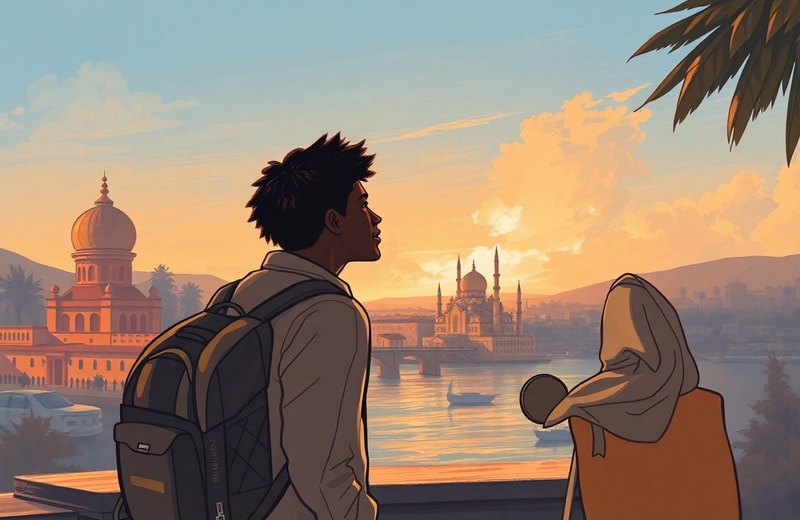
Travel often promises an escape from everyday realities, but for many people of color, it can also amplify experiences of exclusion and otherness. Japan, celebrated for its rich traditions, meticulous service, and stunning landscapes, is a dream destination for countless travelers. Yet beneath the surface of politeness lies a complex social fabric where homogeneity can breed subtle but persistent discrimination. This article examines one traveler's account of encountering racial bias during a month-long trip to Japan, offering an editorial analysis of the cultural and psychological dynamics at play. We explore how passive exclusion manifests in service interactions, the emotional toll of repeated invisibility, and what travelers can do to prepare for and navigate such challenges. By understanding these patterns, we can foster more honest conversations about inclusion in global tourism and empower individuals to advocate for respectful treatment abroad.
II. The Situation (Story Summary)
A traveler describes a month-long trip to Japan marked by repeated instances of what they perceived as racial discrimination. Despite thorough preparation—learning Japanese phrases, studying etiquette, and reading mixed reviews online—they encountered cold treatment in restaurants, misinformation from staff, and a pattern of being ignored or dismissed while other guests received warm service. Incidents ranged from being seated away from locals in a small town, being handed a buzzer while East Asian guests got table service, to being told a restaurant was closed when other groups walked in. The traveler, a person of color, felt that their skin tone determined the quality of hospitality. They also reflect on Japan's historical amnesia regarding wartime atrocities, connecting present-day exclusion to deeper societal attitudes. The experience left them feeling invisible and carrying a heavy emotional weight long after returning home.
III. Why This Conflict Happened
The conflict described is not a single interpersonal dispute but a systemic pattern of microaggressions rooted in cultural and racial dynamics. At its core, the traveler's expectations clashed with the reality of Japan's homogeneous society, where non-Japanese, especially those with darker skin, can be treated as outsiders. The hospitality industry, while globally renowned, operates within cultural norms that prioritize in-group harmony and may unconsciously exclude those who do not fit the expected image. The traveler's preparation, though thorough, could not shield them from biases that are often subtle and denied. The emotional conflict arises from the cumulative weight of being repeatedly made to feel unwelcome, challenging the idealized image of Japan as a flawless destination. Additionally, the traveler's reflections on Japan's historical denial of atrocities suggest a broader frustration with a society that projects humility yet avoids confronting uncomfortable truths. This layered conflict highlights how personal travel experiences can become entangled with larger sociopolitical narratives, intensifying feelings of alienation.
IV. The Psychology Behind
From a psychological standpoint, the traveler's experience exemplifies the concept of 'microaggressions'—brief, everyday slights that communicate hostile or derogatory messages. These are often unintentional but cumulatively damaging. The traveler's repeated encounters with service discrimination trigger what psychologists call 'attributional ambiguity': the difficulty of discerning whether a negative interaction is due to one's race or other factors. This ambiguity can lead to chronic stress and hypervigilance. Additionally, the traveler's thorough preparation reflects a coping strategy known as 'identity management'—attempting to control how one is perceived by adopting the host culture's behaviors. When this fails to prevent bias, it can result in learned helplessness and disillusionment. The emotional response—feeling invisible—relates to 'social pain,' where exclusion activates the same brain regions as physical pain. The traveler's later critique of Japan's historical denial may stem from a need to make sense of present-day rejection by connecting it to a broader pattern of othering. This cognitive framing provides a narrative that validates their experiences, but also risks reinforcing a polarized view of the culture.
V. Editorial Conflict Perspectives
Subject A Evaluation
What they did right:
What they did wrong:
Subject B Evaluation
What they did right:
What they did wrong:
Editorial Synthesis & Resolution Pathway
This case underscores a fundamental tension between cultural pride and global hospitality. Japan's strength lies in its rich traditions and meticulous service, but these can become tools of exclusion when applied selectively. The traveler's pain is valid and reflects a real pattern that many BIPOC visitors encounter. However, it is equally important to avoid demonizing an entire nation. The editorial perspective advocates for a balanced view: acknowledging the reality of discrimination while recognizing that individual interactions vary widely. The path forward involves both travelers arming themselves with realistic expectations and Japan's tourism industry embracing diversity training. True hospitality transcends ethnicity and requires conscious effort to make every guest feel valued. Ultimately, this story is a call for introspection—for travelers to manage expectations without losing wonder, and for host countries to examine how their cultural norms may inadvertently alienate.
VI. Relationship Behavior Analysis: Red Flags vs. Normal Errors
| Identified Behavior | Editorial Classification | Analytical Assessment & Impact |
|---|---|---|
| Staff at a restaurant in Osaka told the traveler the line was closed, but other groups entered shortly after. | Red Flag | This pattern of selective service, where the same policy is applied differently based on appearance, indicates systemic bias rather than a one-off mistake. It suggests an unspoken policy of exclusion that is hard to prove but palpable. |
| A ticket agent gave the traveler incorrect directions, sending them to the wrong location. | Normal Relationship Mistake | Misinformation can occur due to language barriers, fatigue, or simple error. While frustrating, this could be an innocent mistake rather than intentional discrimination. However, the agent's dismissive tone raises questions. |
| The traveler generalized Japan's wartime denial as related to their service experiences. | Normal Relationship Mistake | Connecting personal travel grievances to historical issues is a common cognitive shortcut to make sense of pain. While understandable, it may conflate separate issues and create a biased narrative. A more nuanced view separates individual interactions from national history. |
| A server smirked when the traveler said 'Gochisosama deshita.' | Red Flag | The smirk suggests condescension or mockery, which is a clear sign of disrespect. Even if the traveler's pronunciation was imperfect, a professional server should respond with courtesy. This behavior reflects an attitude that devalues non-Japanese customers. |
VII. Financial, Familial & Social Factors
Traveling to Japan as a BIPOC individual involves not only financial investment but also social and emotional costs. The traveler spent considerable money on flights, accommodations, and experiences, expecting reciprocal respect. When that respect is missing, the financial loss is compounded by emotional distress. Socially, the traveler may feel pressure to represent their race positively, adding to the burden. Additionally, the prevalence of curated positive content online creates social expectations that clash with reality, leading to cognitive dissonance. There is also a social cost to speaking out: sharing negative experiences can attract backlash from those who idealize Japan. Financially, travelers might consider investing in services that prioritize inclusion, such as guided tours by BIPOC-friendly companies, to mitigate risk. Understanding these factors can help travelers budget not just money but also emotional reserves for the trip.
VIII. What Healthy Individuals Do Instead
Instead of internalizing exclusion, travelers can adopt a proactive mindset. One healthy alternative is to join group tours or cultural exchange programs that intentionally bridge gaps between visitors and locals. These settings often foster genuine connections beyond superficial service interactions. Another approach is to diversify your itinerary: balance tourist-heavy spots with off-the-beaten-path locations where locals may be more curious than guarded. Learning a few phrases in Japanese is excellent, but also learn about non-verbal communication norms to avoid misinterpretations. For instance, silence is not necessarily rudeness but can reflect shyness or language anxiety. When faced with a cold response, try a warm smile and a simple 'Arigato'—sometimes it breaks the ice. Finally, practice self-compassion. Remind yourself that bias is a reflection of the other person's limitations, not your worth. Engage in activities that affirm your identity, such as visiting museums or cultural centers that celebrate diversity. If the emotional weight becomes heavy, seek out online communities of fellow BIPOC travelers who can offer empathy and practical tips. Remember, travel is as much about inner journey as outer discovery; each challenge is an opportunity for growth.
IX. Essential Relationship Lessons
- Lesson 1: Prepare for emotional resilience, not just logistics. While learning phrases and etiquette is important, also mentally prepare for potential bias. Research both positive and negative experiences from travelers similar to you. Build a support network of fellow travelers or locals who can offer perspective.
- Lesson 2: Separate individual interactions from cultural generalizations. A rude server does not represent an entire nation. Avoid jumping to conclusions about a country's character based on a few encounters. Practice cognitive reframing to prevent one bad experience from coloring your entire trip.
- Lesson 3: Document and seek validation. Keeping a journal of incidents can help you process emotions and later analyze patterns. Sharing with trusted friends or online communities can provide validation and practical advice. However, be cautious of echo chambers that reinforce negativity.
- Lesson 4: Practice assertive but polite communication. When faced with service issues, calmly ask for clarification. For example, 'I noticed the table service is different for us. Is there a reason?' This can sometimes resolve misunderstandings and assert your right to fair treatment.
- Lesson 5: Recognize the limits of preparation. No amount of research can guarantee a bias-free experience. Accepting this uncertainty can reduce disappointment. Focus on the aspects of travel you can control—your attitude, responses, and willingness to find joy despite challenges.
- Lesson 6: Engage with local allies. Seek out Japanese individuals or organizations that promote diversity and inclusion. Connecting with expat communities or progressive locals can provide safe spaces and different perspectives on Japanese society.
- Lesson 7: Advocate for change constructively. If you experience discrimination, consider reporting it to tourism boards or leaving reviews that highlight the issue without being inflammatory. Constructive feedback can pressure the industry to improve training and policies.
X. Frequently Asked Questions
Q: Is racial discrimination common in Japan's tourism industry?
A: While not universal, many BIPOC travelers report experiencing subtle bias in service settings. Japan's homogeneous society can lead to unconscious exclusion of those perceived as outsiders. However, experiences vary widely, and many visitors have positive interactions. It's important to research and prepare but not assume the worst.
Q: How can I report discrimination while traveling in Japan?
A: You can report incidents to the Japan Tourism Agency or local consumer affairs centers. Some international organizations like the Human Rights Watch also track such issues. However, language barriers and cultural norms may limit recourse. Often, leaving detailed reviews on platforms like TripAdvisor or Google Maps can alert other travelers and pressure businesses to improve.
Q: What steps can Japan take to improve inclusivity in tourism?
A: Japan could implement diversity training for hospitality staff, promote multicultural hiring, and create clear anti-discrimination policies. Public campaigns that celebrate diversity and enforce penalties for discriminatory practices would also help. Travelers can support these changes by providing constructive feedback and patronizing inclusive businesses.
XI. Final Editorial Verdict & Path Forward
The traveler's experience is a poignant reminder that travel is not immune to the biases that permeate societies worldwide. While Japan offers immense beauty and cultural richness, its hospitality can falter when faced with diversity. The verdict here is not to condemn Japan but to call for awareness and growth. The traveler did nothing wrong in expecting respectful treatment; their pain is legitimate. However, the solution lies in balanced perspective: acknowledging the reality of bias without letting it define an entire nation or one's travel experience. For future travelers, the key is to prepare emotionally, seek connection, and advocate for fairness. For Japan, the challenge is to evolve its concept of omotenashi (hospitality) to embrace all visitors equally. Ultimately, this story is a catalyst for dialogue—a step toward a world where travel truly opens hearts and minds, regardless of skin color.
XII. Editorial Responsibility Distribution
| Assessment Group | Weight |
|---|---|
| Traveler's Experience Valid | 70% |
| Overgeneralization | 20% |
| Cultural Misunderstanding | 10% |
XIII. About the Author
This article was prepared by the Interpersonal Dynamics & Editorial Team, a group of writers and researchers specializing in cross-cultural communication, social psychology, and travel ethics. Our mission is to foster understanding and inclusion by analyzing real-world conflicts through an educational lens. We draw on academic research and diverse perspectives to offer balanced, actionable insights for readers navigating complex social landscapes.
XIV. Sources & Further Reading
Disclaimer: The reference literature cited below comprises general authoritative studies on interpersonal dynamics and healthy relationship habits strictly for educational background.
- American Psychological Association – Research on microaggressions and their cumulative impact on mental health.
- Japan Tourism Agency – Official guidelines for hospitality and visitor experience standards.
- Human Rights Watch – Reports on racial discrimination in tourism and hospitality industries globally.
Commentaires
Enregistrer un commentaire